

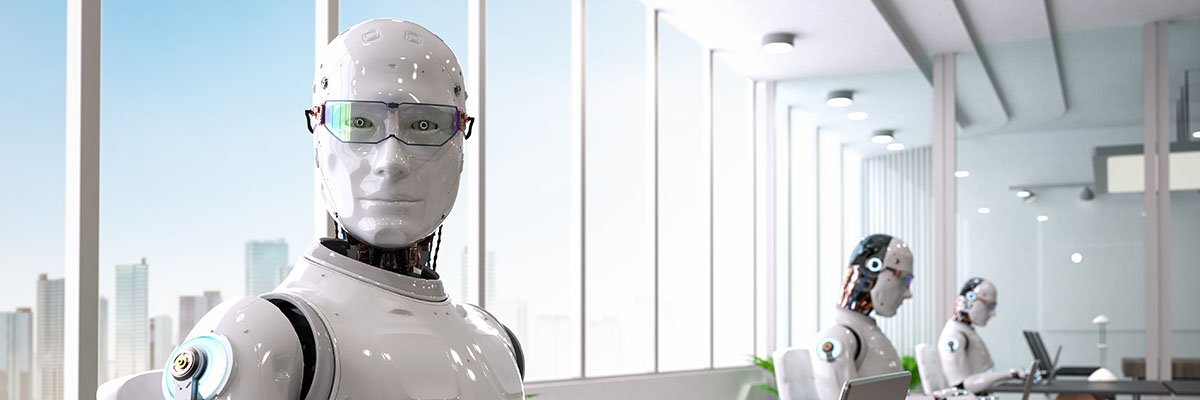

The most successful companies of the future will be those that learn to scale not just through technology, but through smart collaboration between humans and AI. AI agents are already taking on meaningful roles by helping execute research and workflow tasks, generate campaigns, provide sales guidance, and predict trends using large data sets.
What this signals is not a marginal improvement in efficiency but a structural change in the nature of the work itself. AI is redefining roles, responsibilities, and the value human talent brings to the enterprise. As digital agents take on high-volume, routine activities, organizations are redistributing human effort toward the areas that demand creativity, strategic judgment, and emotional intelligence. As an example, human workers are uniquely equipped to build trust and relationships, handle complex negotiations, inspire and lead teams, and make strategic decisions under uncertainty.
Companies are exploring AI agents
The transformation is already underway. According to Capgemini, two out of three organizations are preparing for or exploring deployment of AI agents. At the same time, a McKinsey survey found that only one percent of organizations considers their AI initiatives to be mature. Many companies are still stuck in pilot programs, figuring out how to scale.
One of the biggest challenges lies not in technology, but in the structure and readiness of existing processes. Many companies apply AI to old processes and expect better results. But if the process is broken, automating it only accelerates inefficiency. The real opportunity lies in redesigning workflows from the ground up. The organizations that embrace this shift (reimagining work with agents at the core) won’t just improve productivity; they’ll redefine what competitive advantage looks like. Leaders should be asking: if we were building this process today, with digital agents from the start, how would it look?
When AI and humans work best
AI and human collaboration works best when each side does what it does best. As Thomas Malone of MIT’s Center for Collective Intelligence puts it, “Combinations of humans and AI work best when each party can do the thing they do better than the other.” This is not about dividing tasks between humans and machines. It is about redesigning the process so they can work together effectively.
In customer service, AI agents can surface relevant knowledge articles, detect sentiment, and suggest next steps. Human agents can then focus on solving complex issues with empathy. In marketing, AI can generate initial campaign drafts or segment audiences, while human marketers refine strategy and creative messaging. In operations, AI agents can automate repetitive workflow tasks and surface real-time insights, enabling teams to focus on optimizing processes and driving strategic outcomes.
AI helps people do better work
This is already leading to measurable gains. A study involving more than 2,300 people working with AI agents showed a 137 percent increase in team communication. Employees spent 23 percent more time on idea generation and 20 percent less on repetitive editing. The result was a 60 percent increase in individual productivity and a noticeable rise in creative quality. AI did not replace people; it helped them do better work.
To make this kind of transformation possible, leadership begins with intention. AI agents need structure, just like any member of the team. Leaders should define roles, responsibilities, performance metrics, and guardrails. Governance, transparency, and ethics should be embedded into every decision about how AI is designed and deployed. This is not just an IT challenge. It is a leadership challenge. CEOs have a responsibility to shape organizations where human and digital talent can thrive together. That means moving beyond pilots, building trust, and creating cultures that are ready to learn and evolve.
The future workforce is not fully human and that is a good thing. It allows us to build organizations that are faster, smarter, and more human in spirit. AI will not make our companies less human, but rather it will help us focus more on the work that truly matters.
Katherine Kostereva is the CEO of tech unicorn, Creatio
