Latest Spatial Computing News: Key Industry Updates, Product Launches, and What They Mean for 2026

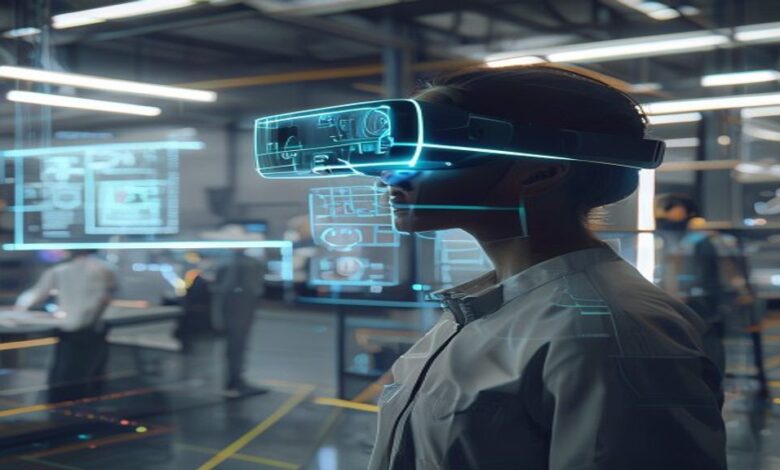
Spatial computing is no longer a futuristic concept—it’s becoming the interface layer for the real world. From mixed reality headsets and enterprise AR platforms to new sensors, AI perception models, and developer tooling, 2026 is shaping up to be a decisive year. In this roundup, we break down the latest spatial computing news and industry updates that matter most to builders, enterprises, investors, and creators—along with what these changes mean for the next wave of applications.
Why Spatial Computing News Is Accelerating Right Now
The pace of announcements in spatial computing is increasing for a simple reason: the hardware and software stacks are finally converging. Head-mounted displays and wearable devices are improving their tracking accuracy, rendering pipelines, and comfort. Meanwhile, platform vendors are aligning around shared standards and better developer experiences.
At the same time, enterprises are pushing adoption. Companies want measurable outcomes—faster training, reduced downtime, better design-to-production cycles—not just “cool demos.” As a result, recent updates are increasingly focused on deployment, security, interoperability, and workflow integration.
Mixed Reality Headsets: What’s New in Performance, Comfort, and Tracking
One of the biggest themes in recent spatial computing announcements is practical performance: better eye tracking, improved hand tracking, wider field-of-view designs, and more reliable spatial mapping. Vendors are also emphasizing reduced latency and improved depth estimation, which are crucial for convincing interactions with virtual objects anchored to physical space.
1) Tracking and Spatial Mapping Improvements
Across new releases and developer updates, spatial mapping quality is a recurring headline. Better plane detection, more stable room understanding, and reduced drift help applications remain usable in dynamic environments—factories with moving equipment, classrooms with changing furniture, or retail stores with shifting displays.
Industry teams are also investing in faster calibration and improved lighting robustness, which helps systems perform in both bright retail floors and dim industrial bays.
2) Input Advances: Hands, Gaze, and Voice
Recent updates continue to refine how people interact with spatial interfaces. Hand tracking is becoming more precise, while eye tracking is improving selection accuracy for accessibility and productivity use cases.
Voice input remains a major focus for reducing friction in hands-busy workflows. The most effective systems pair voice with context—so the app knows whether you mean “zoom in on the blueprint” or “start the safety checklist.”
3) Comfort and Adoption: Lighter Designs and Better Thermal Management
Beyond pure specs, manufacturers are addressing comfort. Lighter devices, improved straps, and better thermal performance are helping longer sessions feel more practical—especially for training, maintenance, and collaborative design reviews.
Spatial AI and Perception: The Shift From Demos to Useful Intelligence
Spatial computing is increasingly “spatial AI.” In other words, the system isn’t only rendering content in a user’s environment—it’s interpreting what’s happening there and acting accordingly.
1) Better Scene Understanding for Real-World Anchoring
Developers are gaining new tools for scene understanding: identifying surfaces, segmenting objects, and creating persistent anchors that can survive changes in viewpoint. These upgrades are essential for applications like AR guided work instructions, virtual prototyping, and collaborative digital twins.
2) Multimodal Interfaces: Seeing, Speaking, and Doing
One of the most important trends in latest spatial computing updates is multimodality. Platforms increasingly support combinations of vision, speech, and contextual reasoning so the user experience feels more natural.
- Vision: Recognize objects, markers, or environments.
- Speech: Command actions and retrieve information.
- Context: Interpret intent based on task state and location.
This combination is particularly valuable for training: a system can recognize that a technician is performing a step incorrectly and then guide the next action in the correct order.
3) Privacy-by-Design Approaches
As spatial AI relies on sensors and perception, privacy matters more than ever. The newest industry conversations emphasize consent flows, on-device processing options, and privacy controls for spatial data capture. Expect more enterprise-oriented releases that provide clearer governance for recordings, spatial maps, and identity-linked experiences.
Developer Ecosystems: New SDKs, Better Tooling, and Accelerated Prototyping
If you’re building in spatial computing, the developer experience is often the real news. Recent updates across platform ecosystems focus on:
- Faster iteration loops for spatial scenes and interactions.
- Improved asset pipelines for 3D models, occlusion assets, and rendering optimization.
- Testing and debugging tools for tracking stability and performance profiling.
- More robust spatial frameworks for anchors, networking, and multi-user collaboration.
1) Performance Tooling: From “It Works” to “It Works Everywhere”
Early spatial prototypes frequently fail on performance under real conditions: crowded rooms, inconsistent lighting, network latency, and multi-user presence. New tooling helps developers measure frame rates, latency, rendering bottlenecks, and sensor update rates.
This is key for enterprise readiness, where reliability beats novelty. Better profiling tools reduce the time between idea and deployment.
2) Asset and Content Pipelines
3D assets and scene content are often the hidden bottleneck. Platform updates increasingly support optimization workflows so developers can ship experiences that run smoothly on constrained hardware.
Look for continued adoption of:
- Texture compression and LOD strategies
- Occlusion and lighting approximation for stability
- Better ways to stream content without breaking immersion
Enterprise Spatial Computing: ROI, Security, and Integration With Existing Systems
Perhaps the most consequential trend is the move from pilots to production. Enterprises are adopting spatial computing for workflows that justify the investment. Meanwhile, vendors are responding by adding features enterprises asked for: governance, identity, audit logs, network controls, and integration into current IT ecosystems.
1) Training and Safety: Measurable Outcomes
Training remains the flagship use case because it can deliver measurable improvements. Recent updates emphasize:
- Step-by-step guided procedures anchored to real equipment
- Performance analytics to track completion and error rates
- Scenario-based learning for rare or high-risk events
Safety applications are also expanding beyond training into real-time guidance, with systems designed to be unobtrusive and resilient.
2) Maintenance and Remote Assistance
Spatial computing is increasingly used to reduce downtime. Developers and enterprise partners are integrating spatial instructions with work-order systems, asset databases, and remote expert support.
The most effective deployments rely on reliable spatial anchoring, clear UI patterns, and low-friction capture of what’s happening on-site.
3) Security, Identity, and Data Governance
Enterprise buyers require clarity on how spatial data is stored and who can access it. Expect more platform releases that support fine-grained permissions, policy enforcement, and secure handling of spatial maps and recordings.
Teams are also paying attention to supply chain security for 3D assets and third-party SDK dependencies.
Collaboration in Spatial Spaces: Multi-User Experiences Get Practical
Single-user spatial apps are useful—but the real differentiator is collaboration. The latest industry updates increasingly highlight multi-user environments where people can share understanding of a space, discuss changes, and jointly iterate.
1) Persistent Shared Anchors
A major milestone for collaborative spatial computing is persistent shared anchors. Instead of each user seeing different placements, the system maintains alignment across sessions and viewpoints. This matters for:
- Architecture and construction reviews
- Engineering design workshops
- Training teams working through procedures
2) Networking and Latency Optimization
Multi-user experiences must handle latency gracefully. Developers are adopting networking patterns that prioritize perceived responsiveness—keeping interactions smooth even when connections fluctuate.
Expect continued progress on:
- Prediction and smoothing for moving objects
- Efficient state synchronization
- Low-bandwidth sharing of spatial context
Standards, Interoperability, and the Race Toward Portability
Spatial computing has multiple hardware ecosystems. To scale beyond niche, the industry needs interoperability. Recent updates across the market show rising focus on standards, shared schemas, and portable content approaches.
Why Interoperability Matters for Buyers
Enterprises don’t want to rebuild every application for each device. Interoperability reduces total cost of ownership and lowers risk when hardware refresh cycles accelerate.
For developers, portability encourages reuse of spatial UI components, interaction patterns, and anchor strategies across platforms.
Retail, Entertainment, and Consumer Experiences: Where Spatial Is Becoming “Normal”
While enterprise drives many early wins, consumer use cases are also evolving. The latest spatial computing news reveals continued experimentation in retail try-ons, immersive product storytelling, and entertainment experiences designed for social interaction.
1) Retail: Try-Ons and Product Visualization
Retail experiences benefit from spatial anchoring and camera-based understanding. Shoppers can see products in context—like furniture placement in a room or apparel visualization—without needing to imagine scale.
2) Entertainment: Performance and Social Presence
Immersive entertainment requires stable tracking, responsive input, and comfortable visuals. Industry updates suggest that developers are refining locomotion, interaction design, and multi-user presence to reduce friction.
3) Education and Museum Experiences
Educational deployments often rely on curriculum alignment and accessibility. Spatial computing can make abstract concepts tangible—especially when content is interactive and anchored to real-world references.
What to Watch Next: Predictions for the Coming Quarter
Based on the direction of current spatial computing news and industry updates, here are the trends most likely to gain momentum:
- More on-device intelligence: Faster, more private perception models running closer to sensors.
- Enterprise-ready governance: Better policy controls for capture, sharing, and auditability.
- Spatial UI patterns standardize: Cleaner interaction paradigms that reduce learning curves.
- Real-time collaboration improves: More robust shared anchors and smoother multi-user networking.
- Vertical solutions expand: More packaged applications for training, maintenance, and field services.
How Businesses Can Prepare for Adoption
If you’re evaluating spatial computing, treat it like any other platform transition: start with measurable goals, build a repeatable deployment approach, and invest in change management.
Start With High-Impact Use Cases
Best early targets are workflows with:
- Frequent repetition (training modules)
- High risk or cost (safety and maintenance)
- Complex spatial reasoning (design review, layout planning)
Build for Reliability, Not Just Wow
Performance, tracking stability, and user comfort determine whether adoption sticks. Pilot programs should test in real environments and include device management, user onboarding, and offline/low-connectivity scenarios where relevant.
Plan Data and Security Early
Spatial computing can generate sensitive spatial data. Define how recordings and maps are handled from day one, including retention policies, access controls, and user consent workflows.
Spotlight: The Skills Developers Will Need in the Next Phase
Spatial computing is multidisciplinary. Teams that succeed in production deployments typically combine:
- 3D and rendering engineering for stable, efficient visuals
- Spatial perception and interaction design for natural user experiences
- Networking and systems design for multi-user reliability
- AI integration for reasoning and multimodal experiences
- Security and governance for enterprise readiness
In other words, the “next phase” isn’t just about building applications—it’s about building dependable products.
Conclusion: Spatial Computing Is Moving From Potential to Platform
The latest spatial computing news and industry updates point to a clear direction: spatial experiences are becoming more reliable, more intelligent, and more enterprise-ready. Improvements in tracking, spatial AI, developer tooling, and multi-user collaboration are turning prototypes into tools people can trust at work and in everyday life.
If you’re watching the space, the most important takeaway is this: the value of spatial computing now depends on execution—performance, usability, security, and integration—rather than novelty alone. The organizations that align their strategy around measurable outcomes will be the first to capture the real market advantage of the spatial web.
Stay tuned: The next wave of updates will likely focus on portability across device ecosystems, more standardized spatial semantics, and faster ways to ship vertical solutions that deliver ROI in weeks—not months.
