

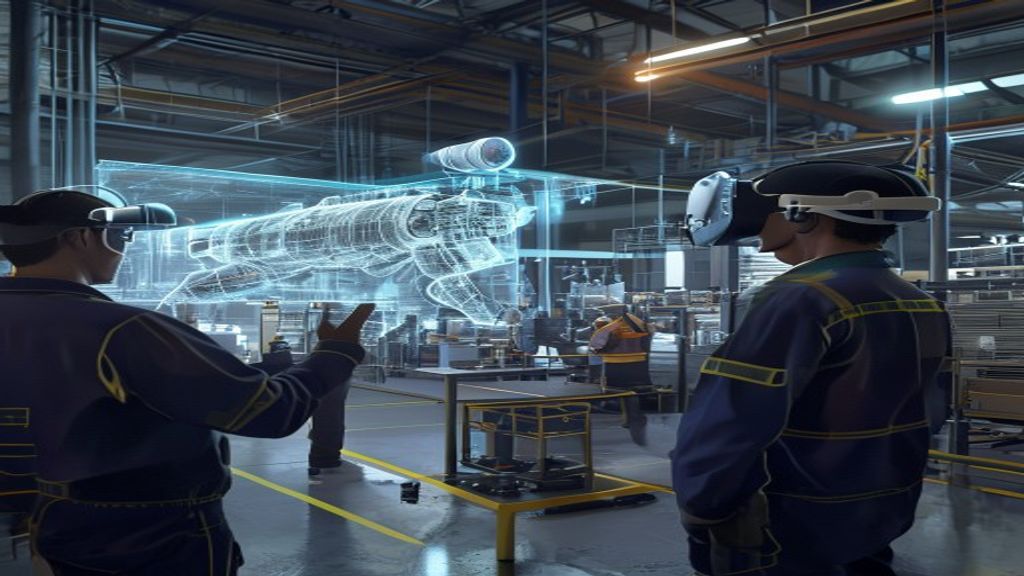

Augmented Reality (AR) and Virtual Reality (VR) have moved far beyond gimmicks and demos. Across industries, teams are using immersive technologies to train employees faster, help customers visualize products before purchase, improve safety, and redesign workflows that used to be limited by physical distance. The result is not just “cool tech”—it’s practical, measurable value.
In this guide, we’ll explore real-world use cases of AR/VR that organizations are implementing today. We’ll break down what’s being built, why it works, and what benefits you can expect. Whether you’re a business leader evaluating ROI, a product manager planning a roadmap, or a developer looking for inspiration, you’ll find use cases that translate into real outcomes.
Why AR/VR Adoption Is Accelerating
AR overlays digital information onto the real world, while VR immerses users in a fully simulated environment. Both approaches reduce friction in how people learn, decide, and interact with complex systems.
- Better visualization: Spatial and contextual rendering makes it easier to understand size, scale, and relationships.
- Faster training: VR simulations allow repetition without risking equipment or human safety.
- Remote collaboration: Immersive experiences can bring expertise to where it’s needed, even across continents.
- Lower costs over time: Once content and hardware pipelines are established, per-training or per-support sessions can decrease.
But the biggest driver is the same for nearly every industry: AR/VR turns abstract ideas into experiences. And experiences are easier to remember, measure, and act on.
Real-World Use Cases of AR/VR Across Industries
1) Training & Workforce Development
One of the strongest ROI areas for VR is training—especially in roles where mistakes are costly. VR provides hands-on practice in a risk-free environment, improving both confidence and readiness.
Common VR training scenarios include:
- Safety training for mining, manufacturing, oil & gas, and construction
- Equipment operation (forklifts, cranes, industrial machinery)
- Emergency response drills (fire, evacuation, medical scenarios)
- Soft skills training such as leadership, de-escalation, and customer interactions
Real-world impact: Organizations report improved retention, faster time-to-proficiency, and fewer incidents during real operations. Because the environment is simulated, trainers can tailor scenarios to specific sites and procedures.
How AR complements VR: While VR is ideal for immersive practice, AR can guide workers during actual tasks. For example, AR overlays step-by-step instructions on equipment during maintenance, reducing downtime and errors.
2) Healthcare: Surgical Planning, Therapy, and Medical Education
Healthcare is using AR/VR to increase precision, improve patient outcomes, and enhance learning for clinicians.
High-value AR/VR use cases include:
- Pre-surgical planning: AR helps teams visualize anatomy in context, improving communication and reducing surprises.
- VR anatomy education: Medical students can explore 3D models and practice procedures without relying solely on textbooks or cadavers.
- Rehabilitation and therapy: VR-based exercises can make repetitive therapy more engaging, supporting patient motivation.
- Pain distraction: Immersive content can help reduce perceived pain during certain treatments.
Real-world impact: Beyond training, immersive experiences can improve coordination among specialists, speed up decision-making, and support consistent care practices.
Important consideration: Healthcare deployments typically require rigorous validation, data privacy protections, and clinical oversight. Still, the potential benefits are substantial.
3) Manufacturing & Industrial Operations
Manufacturers face constant challenges: maintaining complex equipment, training new technicians, and reducing production downtime. AR/VR directly addresses these issues with immersive guidance and simulation.
Real-world examples:
- AR-guided maintenance: Workers wear headsets or use mobile devices to see instructions, diagrams, and diagnostics overlaid on machinery.
- Digital twins and VR walkthroughs: Teams can explore factory layouts before construction or renovation begins.
- Quality assurance: Inspectors can compare real parts to virtual references and spot deviations faster.
- Ergonomics testing: VR allows employees to assess workstation comfort and movement before committing to physical changes.
Real-world impact: Faster troubleshooting, reduced error rates, and fewer disruptions during maintenance. For training, VR can standardize learning across sites.
4) Retail & E-Commerce: Virtual Try-Ons and Product Visualization
In retail, the question is simple: how do you help customers feel confident before they buy? AR provides that by letting customers preview products in their own space, while VR can deliver immersive showrooms and experiences.
Common consumer-facing use cases:
- AR furniture previews: Customers see how a sofa, desk, or decor fits in their home.
- Virtual try-on: AR enables realistic makeup, glasses, and clothing previews.
- In-store AR experiences: Shoppers scan products to reveal details, usage tips, and comparisons.
- VR showrooms: Users explore immersive environments—especially useful for high-ticket items like vehicles or luxury real estate.
Real-world impact: Many retailers aim to increase conversion rates and reduce returns by improving product understanding. When customers visualize scale and fit correctly, decision friction drops.
Bonus: AR can also improve merchandising by making promotions interactive and personalized.
5) Real Estate & Architecture: From Blueprints to Immersive Walkthroughs
Real estate and architecture traditionally rely on 2D plans and static renderings. AR/VR replaces that with spatial experiences that help stakeholders align quickly.
Where AR/VR is used:
- VR property walkthroughs: Buyers and investors can “tour” a property before it’s built.
- AR overlays during design reviews: Designers and clients can view proposed changes on site or in a physical model.
- Renovation planning: VR helps visualize remodels while maintaining realistic context.
- Contractor coordination: Teams can reduce miscommunication by seeing the intended outcome in 3D.
Real-world impact: Better stakeholder buy-in, fewer late-stage changes, and more efficient decision cycles—especially for projects with multiple parties and complex constraints.
6) Education & Training Beyond the Workplace
Schools, universities, and training programs are increasingly using AR/VR to make learning more engaging and accessible.
Notable use cases:
- Immersive science lessons: Students explore biology systems, space environments, or historical settings.
- Virtual labs: Learners conduct experiments in simulation—useful when equipment is expensive or hazardous.
- Career exploration: VR experiences expose students to professions like engineering, healthcare, and aviation.
- Language learning: AR/VR can provide contextual practice in immersive environments.
Real-world impact: Increased engagement and improved comprehension for complex topics. In training contexts, simulated practice can also reduce the gap between instruction and real-world performance.
7) Sports, Entertainment & Live Events
Sports and entertainment have been early adopters of immersive tech because it’s inherently experiential. While the tech evolves quickly, the fundamental goal remains: create memorable, shareable moments.
Common AR/VR use cases:
- Immersive fan experiences: VR can put viewers closer to the action through 360-degree content.
- Interactive AR overlays: Fans see real-time stats and highlights on their device screens or headsets.
- Training for athletes: VR can help analyze movement, improve technique, and simulate scenarios.
- Virtual concerts and performances: Artists create digital stages for global audiences.
Real-world impact: Higher engagement and new revenue models such as virtual tickets, sponsorships, and premium experiences.
8) Logistics, Field Service & Remote Assistance
Field service teams often struggle with inconsistent access to experts, slow troubleshooting, and delays caused by time zones. AR can reduce those gaps by enabling real-time guidance.
Typical AR-enabled workflows:
- Remote expert support: A technician shares what they see; an expert annotates the field view with instructions.
- Guided repairs: Step-by-step AR reduces reliance on memory and on-the-job mentoring.
- Inventory support: AR can help locate parts faster and improve picking accuracy.
- Documentation and compliance: AR can capture job progress with context, improving traceability.
Real-world impact: Reduced downtime and faster resolution times. Remote guidance can also improve consistency across regions.
9) Automotive & Mobility: Design, Sales, and Maintenance
The automotive sector uses AR/VR in both customer-facing and internal workflows.
High-impact examples:
- AR vehicle configurators: Buyers can visualize colors, wheels, or interior features in realistic contexts.
- VR design review: Engineers and designers test ergonomics, visibility, and cabin layout before prototyping.
- VR training for technicians: Technicians learn repair procedures in immersive simulations.
- AR maintenance support: Head-up guidance helps technicians complete tasks faster and with fewer errors.
Real-world impact: Faster design iterations, improved customer confidence, and reduced repair complexity.
10) Banking, Financial Services & Insurance (BFSI)
BFSI may not be the first industry people associate with AR/VR, but it’s adopting immersive tech for training and customer engagement.
Potential use cases:
- VR compliance training: Simulated scenarios help employees practice decision-making and policy adherence.
- Immersive onboarding: AR-based tutorials can guide users through account setup or product education.
- Virtual consultations: Some providers use VR environments for remote meetings and presentations.
Real-world impact: Consistent training and improved understanding of complex products—particularly when paired with scenario-based learning.
Use Cases That Deliver Measurable ROI
Not every AR/VR project succeeds. The most effective deployments share a common trait: they address a real bottleneck. Here are the use-case patterns that consistently lead to measurable impact.
Choose Problems Where Immersion Adds Value
- Complex spatial tasks: Assembly, maintenance, logistics, and design review.
- High-risk scenarios: Safety training, emergency response, and hazardous operations.
- Learning-by-doing needs: Procedures, technical operations, and scenario practice.
- Customer decision support: Visualization that reduces uncertainty (fit, scale, compatibility).
Prioritize Workflows with Clear Success Metrics
To justify investment, define outcomes such as:
- Reduced training time to competency
- Lower error rates and fewer rework cycles
- Faster time-to-resolution for support tickets
- Increased conversion rates or reduced returns in retail
- Improved engagement metrics in education and entertainment
Start with Pilots, Then Scale
Many organizations begin with pilot programs in a single location, department, or use case. Once the content pipeline and user feedback loops are proven, they expand to additional sites and roles.
What It Takes to Build and Deploy AR/VR Use Cases
If you’re planning to implement AR/VR, it helps to understand the building blocks behind successful projects.
Content Strategy: Simulation, Guidance, or Visualization?
Different use cases require different content approaches:
- Simulation content for training and practice
- Instructional AR overlays for field guidance
- 3D visualization for retail, real estate, and design review
- Analytics and tracking to measure performance and engagement
Hardware & UX Considerations
User experience determines adoption. Key factors include:
- Comfort and motion limits: Reduce fatigue for longer sessions.
- Accessibility: Provide options for different abilities and device constraints.
- Low-friction workflows: Make it easy to start tasks, scan objects, or join sessions.
- Performance optimization: Ensure smooth frame rates and quick loading times.
Data, Privacy, and Compliance
Immersive platforms may capture spatial data, user behavior, or sensitive operational environments. Planning for:
- Data minimization and secure storage
- Role-based access controls
- Industry-specific compliance (especially for healthcare and finance)
…helps avoid delays and strengthens trust.
The Future: Where AR/VR Use Cases Are Headed
AR/VR is evolving rapidly, and several trends suggest the next wave of real-world use cases:
- More natural interaction: Improved hand tracking, voice controls, and spatial mapping.
- Integration with AI: Smart tutoring, automated guidance, and personalized training.
- Better cross-device experiences: Seamless transitions between mobile AR, PC VR, and standalone headsets.
- Richer collaboration: Shared virtual spaces for design reviews, training, and remote assistance.
The companies that win won’t just deploy headsets—they’ll build immersive ecosystems connected to real workflows and real business metrics.
Conclusion: The Best AR/VR Use Cases Are Practical, Not Performative
The most compelling real-world use cases of AR/VR share the same theme: they reduce uncertainty and friction. Whether you’re training technicians, helping customers visualize products, or enabling clinicians to plan complex procedures, immersive technology can make outcomes more consistent and processes more efficient.
If you’re evaluating AR/VR, start with a specific bottleneck, define measurable success criteria, and pilot a narrow use case with stakeholders who will actually use it. From there, scaling becomes far more achievable.
The future of immersive tech is already here—and it’s being used to solve everyday problems, not just wow conference audiences.
