

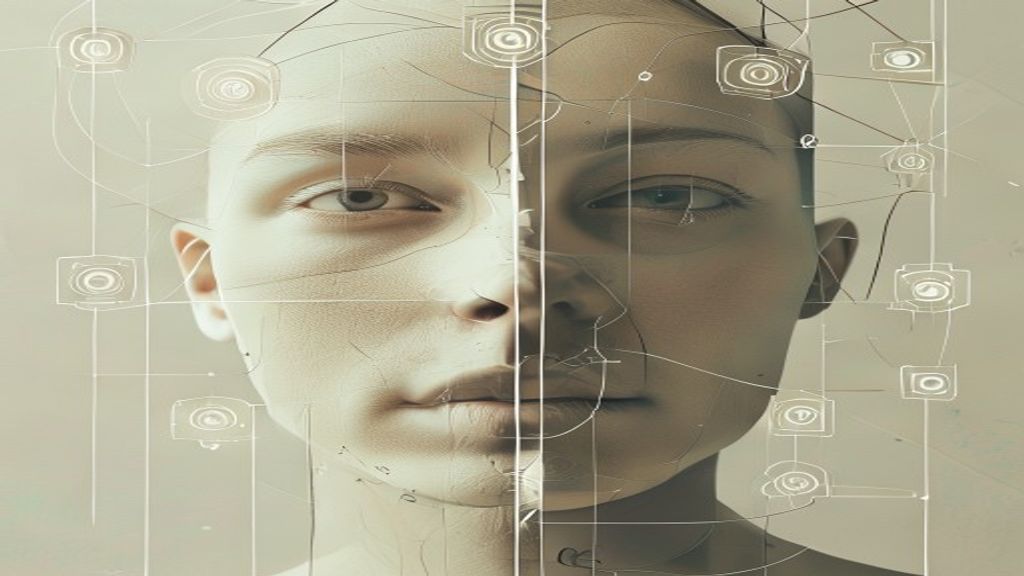

Emotion AI and micro-expression tracking are moving from research labs into workplaces, education platforms, security tools, and consumer devices. They promise something powerful: the ability to infer what people feel—often in real time—by analyzing facial movements, gaze patterns, vocal tone, and other behavioral signals.
But with that promise comes a thorny ethical question: How do we build technologies that interpret human emotion without compromising privacy, autonomy, fairness, and trust? In this article, we’ll unpack the most important ethical concerns surrounding emotion AI and micro-expression tracking, explain why the science is not as settled as marketing suggests, and offer practical principles for responsible deployment.
What Are Emotion AI and Micro-Expression Tracking?
Emotion AI typically refers to systems that attempt to detect, classify, or infer human emotions using data collected from a person. This may include:
- Facial analysis (e.g., facial landmarks, muscle movement patterns)
- Micro-expressions (brief, involuntary facial movements)
- Voice and speech analysis (tone, pitch, tempo, stress patterns)
- Physiological signals (heart rate variability, skin conductance, etc.)
- Behavioral context (reaction times, interaction patterns)
Micro-expression tracking is often positioned as a high-precision method to detect hidden feelings—such as deception, fear, or anger—by analyzing fleeting facial movements. The underlying claim is that certain involuntary expressions correspond reliably to specific internal states.
Ethically, the stakes are high because these systems can influence consequential decisions: hiring, security screening, healthcare triage, learning support, and even performance evaluations.
Why Ethics Matters More Than Ever
Emotion AI is not just a technical tool; it’s a people-reading instrument. When a system claims it can identify emotions, it can effectively produce an interpretation of a person that may be used as evidence. That shifts power from individuals to automated systems and—if misused—can lead to harm.
Ethics matters because emotion-based inference is uniquely sensitive:
- It touches inner life: emotions are tied to identity, dignity, and mental privacy.
- It can be inaccurate: the same expression can have multiple causes.
- It can be coercive: people may feel compelled to perform for the model or be judged by it.
- It can be discriminatory: performance and error rates may vary across demographics.
- It can be misinterpreted: emotions are context-dependent and culturally shaped.
The Core Ethical Challenge: Privacy of Mental States
Emotion Data Is Not Just Another Biometric
Facial recognition is controversial; emotion AI adds another layer. While a face is a biometric identifier, emotion inference can be closer to mental-state data—the kind of information many legal frameworks consider especially sensitive.
When an organization collects emotion signals, it may be capturing information about:
- stress and anxiety
- engagement or confusion
- fear or discomfort
- attitudes toward a person or situation
Even if the system does not explicitly label emotions as “depression” or “trauma,” the data can still reveal patterns about a person’s internal experience. That raises ethical concerns about collecting and processing data beyond what individuals reasonably expect.
Consent Must Be Meaningful, Not Performative
Ethics requires informed, specific, and voluntary consent. But emotion AI often appears in settings where people feel pressured: workplaces monitoring training, schools using proctoring tools, or users being asked to “agree” to a model’s terms.
Meaningful consent becomes difficult when:
- the system is marketed as “non-invasive” while continuously scanning faces
- the user cannot understand what is inferred and how it is used
- refusal carries consequences (e.g., denied access, reduced evaluation)
- data is retained longer than necessary for the stated purpose
In short, consent is not a checkbox; it’s a process. If people cannot realistically opt out or understand the implications, the ethical foundation weakens.
Accuracy and Scientific Uncertainty: The Ethics of Overclaiming
Micro-Expressions Are Not a Universal “Truth Detector”
Emotion AI—especially micro-expression tracking—often leans on simplified models of human expression. Yet human emotion is complex. The same facial movement can reflect different feelings or even non-emotional factors such as:
- muscle tension or fatigue
- cultural display norms
- lighting and camera angle issues
- neurological conditions
- medication effects
- acting or intentional expression
Moreover, micro-expressions are fleeting and difficult to interpret reliably. Ethical deployment demands that developers do not imply certainty when evidence is probabilistic and context-dependent.
False Positives Can Create Real Harm
Emotion inference systems can generate wrong labels with serious consequences. For instance:
- A student misclassified as disengaged may receive inappropriate interventions.
- An employee misread as uncooperative might be penalized.
- A job candidate labeled as anxious or deceptive could be unfairly screened out.
Ethically, organizations must treat these outputs as uncertain signals, not definitive judgments. Using emotion AI as a stand-in for human judgment without transparency about error rates is a major ethical failure.
Bias, Fairness, and the Risk of Discrimination
Demographic Variation in Model Performance
Many computer vision systems struggle across different skin tones, facial geometries, ages, genders, and cultural expression styles. If emotion AI is trained on narrow datasets, it may overfit to certain populations and underperform on others.
That matters because emotion labels are not just statistics—they can shape opportunities. If the system is wrong more often for certain groups, then emotion AI can become a tool of systemic bias.
Cultural Differences in Emotional Display
Emotional expression is influenced by cultural norms. People may suppress certain expressions in some contexts or display emotion differently. A model that assumes a single mapping between facial movement and emotion can misread culturally normative behavior.
Ethically, designers should avoid treating emotion AI as culturally neutral. Fair deployment requires testing across contexts and communities, along with ongoing monitoring.
Transparency: Who Gets to Know What the System Knows?
Explainability for Affected Individuals
Emotion AI can produce outputs that individuals cannot see, challenge, or correct. That creates an imbalance: the organization has a hidden interpretive lens; the individual has little recourse.
Ethical best practice includes:
- clear notice that emotion inference is taking place
- plain-language explanations of what is being measured and why
- access to relevant logs or summaries, when appropriate
- processes to contest or appeal decisions
Black-Box Inferences Are Not “Consent by Default”
Even when people agree to a system, they may not understand how a model transforms raw signals into an emotion label. Ethical deployment requires technical and procedural transparency commensurate with the system’s impact.
If a system can meaningfully affect someone’s prospects—employment, education, safety—then transparency should be robust rather than superficial.
Accountability and Human Oversight
Emotion AI Should Not Replace Judgment
In high-stakes settings, emotion AI should be treated as assistive at most. Human oversight is ethically necessary because:
- humans can incorporate context the model lacks
- humans can notice anomalies and interpret signals responsibly
- humans can correct for known limitations
- humans can be held accountable
Without accountability, emotion AI becomes a black box that produces decisions with no meaningful responsibility assigned to anyone.
Define Responsibility for Errors
When emotion AI fails, who is responsible—the vendor, the deployer, or the operator? Ethics demands clarity. Organizations should establish:
- incident response protocols for erroneous emotion interpretations
- documentation of known limitations
- audits of model performance and drift
- clear decision boundaries (what the system can and cannot be used for)
Misuse Scenarios: When Emotion AI Becomes Coercive or Punitive
Emotion AI in the Workplace
Some employers explore emotion detection for productivity coaching or to flag “stress” and “engagement.” While the stated intent may be supportive, the power dynamics are often unequal. Employees may feel surveilled and penalized for natural reactions—fatigue, frustration, or uncertainty—especially in high-pressure roles.
Ethical guidelines should include strict limits on how emotion data affects evaluations and should require that any interventions be supportive, not punitive.
Emotion AI in Schools and Youth Settings
In education, emotion tracking is especially sensitive because it involves minors and formative experiences. Labeling a child as “confused” or “disengaged” can stigmatize learners and shape teacher responses in ways that are difficult to challenge.
Ethically, emotion AI should be approached with caution, and data collection should be minimized to what is necessary and beneficial.
Emotion AI in Security and Policing
Micro-expression tracking is frequently marketed as a deception detection tool. Ethically, this is among the riskiest uses. Misreading fear, nervousness, or trauma can lead to wrongful suspicion.
In security contexts, where errors can escalate quickly, deploying emotion AI without rigorous evidence, strict oversight, and meaningful safeguards is likely unethical.
Consumer and Dating Apps: The Surveillance Trap
Emotion AI can also appear in consumer products—call centers, customer service tools, or apps claiming to read attraction or trust signals. Even when stakes are lower, the ethical concern remains: people may be manipulated or nudged based on inferred feelings without understanding the inference.
Ethically responsible product design requires minimizing collection, limiting use, and avoiding dark patterns that encourage compliance through fear of being judged.
Data Minimization and Purpose Limitation
Collect Less, Infer Less
One ethical principle that can significantly reduce risk is data minimization: collect only what is necessary for a defined purpose. If emotion AI is used to improve a training interface, it may not need to store raw video. If used for user experience testing, it may be unnecessary to retain long-term emotion trajectories tied to identity.
Purpose Limitation Prevents Function Creep
Emotion data should not be repurposed without renewed consent. Ethical deployment requires strict rules against function creep—the tendency to use the same dataset for new objectives, such as shifting from improving learning to assessing compliance.
Organizations should define:
- what the system is for
- what it is not for
- how long data is retained
- who can access it
- whether re-identification is possible
Privacy-Preserving Architectures: Practical Ways to Reduce Risk
Ethics is not only about policy—it’s also about engineering. Some privacy-preserving approaches include:
- On-device processing so raw video or audio never leaves the user’s device
- Federated learning to reduce centralized data aggregation
- Encrypted storage and strict access controls for any retained data
- Short retention windows for transient inference signals
- Aggregation (e.g., group-level insights rather than individual emotion logs)
These choices help ensure that emotion AI does not become a surveillance pipeline.
Governance, Regulation, and Ethical Standards
As emotion AI grows, governance frameworks are emerging across jurisdictions. Even where regulations differ, ethical requirements converge around themes such as consent, transparency, accountability, safety, and fairness.
Organizations should adopt a formal ethics and risk management process that includes:
- an ethical impact assessment before deployment
- independent audits for bias and performance
- public documentation of limitations and error rates (where appropriate)
- clear escalation procedures for disputes and harms
- continuous monitoring for model drift
Ethical governance is not a one-time compliance exercise. Emotion AI is dynamic: models evolve, contexts change, and populations vary over time.
How to Build Trust: Ethical Design Principles for Emotion AI
1) Be Honest About What the System Can (and Cannot) Know
Emotion AI should communicate uncertainty. If the model outputs probabilities, use them honestly. Do not market outputs as definitive proof of deception or intent.
2) Treat Inferences as Contextual Signals, Not Truth
Design outputs that support human understanding without turning emotional inference into a binary judgment. For example, present “possible stress indicators” rather than “you are lying.”
3) Provide Controls and Real Options to Opt Out
Users should be able to avoid emotion tracking when it is not essential. When opt-out is not possible, the ethical justification must be rigorous and documented.
4) Keep Data Local and Short-Lived
Adopt architectures that reduce retention, limit access, and minimize re-identification risk.
5) Offer Contestability and Redress
If emotion AI affects outcomes, people should have a mechanism to challenge results. Provide accessible explanations and involve humans in review.
6) Conduct Bias Testing in Real Conditions
Performance should be evaluated across demographics and environmental conditions (lighting, camera quality, movement). Include stress tests for fairness and error sensitivity.
What Ethical Deployment Looks Like in Practice
To make the discussion concrete, consider a few scenario-based guidelines:
- Workplace training: use emotion signals to improve content pacing, not to evaluate employees. Keep data ephemeral and transparent.
- Healthcare: ensure emotion inference supports clinicians rather than replacing diagnosis. Validate with clinical evidence and safeguard sensitive data.
- Education: avoid labeling students with fixed emotional traits. Use emotion signals only to suggest supportive learning strategies, not to penalize.
- Security: treat emotion inference as highly unreliable for deception detection. Require strict evidentiary standards and avoid using it as standalone justification.
The Bottom Line: Human Dignity Over Automation of Feelings
Emotion AI and micro-expression tracking can be technically impressive. Yet the ethical core is simple: people are not raw data sources for guessing their inner lives. When technology attempts to read emotion, it must respect mental privacy, avoid overclaiming, mitigate bias, and ensure accountability.
If emotion AI is deployed responsibly—prioritizing transparency, data minimization, human oversight, and fairness—it can support human-centered goals. If deployed carelessly, it risks turning uncertainty into surveillance and turning feelings into tools of control.
The future of emotion AI should not be built on the question, “Can we detect emotions?” It should be built on “Should we—and if so, under what safeguards?”
Further Reading and Responsible Next Steps
If you’re evaluating or adopting emotion AI, consider conducting an ethics review that includes stakeholder input (including affected users), bias testing, independent audits, and a clear account of how emotion inferences are used downstream.
For organizations, the most defensible path forward is to align emotion AI with human rights principles: privacy, autonomy, fairness, and accountability—because in a system that interprets emotion, trust is not optional. It is the product.
